Flash/4
Index / 06 sections
Volume III — Services§ 03 / Services
Catalogue of services

Fifteen disciplines,
one engineering practice.

The following catalogue describes the services Flash 4 GmbH provides in detail. Engagements typically combine several — the studio is small enough that the boundaries between them are professional rather than organisational.

S.01

Custom Software Development

End-to-end design, development, and operation of bespoke software systems built around a specific business problem rather than a generic template.

Key capabilities
  • ·Product discovery and technical specification
  • ·Domain modelling and API design
  • ·Full-stack implementation and code review
  • ·Automated testing at unit, integration, and end-to-end levels
  • ·Release engineering and observability
Business value

Software that is fit to the actual working process of the business, documented well enough to be maintained by others, and inexpensive to change as circumstances evolve.

Typical use cases
  1. 01Internal operations platforms replacing spreadsheets and ad-hoc tools
  2. 02Customer portals and self-service applications
  3. 03Vertical products in regulated or specialised industries

Hands typing on a keyboard in warm light — software development
S.02

Web Application Development

Modern browser-based applications with strong interaction design, fast load characteristics, and accessible interfaces.

Key capabilities
  • ·React, Next.js, and TanStack ecosystems
  • ·Server-side rendering and edge delivery
  • ·Design systems and accessibility engineering
  • ·Performance budgets and Core Web Vitals
  • ·Progressive enhancement and offline behaviour
Business value

Web applications that feel considered on the first load, remain usable on slow networks, and are indexable by search engines when that is a business requirement.

Typical use cases
  1. 01Customer-facing SaaS and marketplace interfaces
  2. 02Internal admin and back-office consoles
  3. 03Content-heavy sites for regulated communications
S.03

Mobile Application Development

Native and cross-platform mobile applications for iOS and Android built to the ergonomics of each platform.

Key capabilities
  • ·Swift and Kotlin native development
  • ·Cross-platform delivery where it materially reduces cost
  • ·Offline-first data models and background sync
  • ·Store submission, provisioning, and release engineering
  • ·Mobile analytics and crash reporting
Business value

Mobile products that feel native, respect platform conventions, and remain maintainable across the lifetime of the mobile operating systems they target.

Typical use cases
  1. 01Field-operations and workforce applications
  2. 02Consumer utilities with strong offline requirements
  3. 03Companion applications for physical products
S.04

Cloud Solutions

Design, migration, and operation of cloud environments on AWS, Google Cloud, and Azure — with cost, security, and reliability treated as first-class engineering concerns.

Key capabilities
  • ·Cloud architecture and landing-zone design
  • ·Migration of legacy workloads
  • ·Cost engineering and FinOps practice
  • ·Multi-region and disaster recovery design
  • ·Serverless, container, and virtual-machine workloads
Business value

Cloud environments whose behaviour, cost, and risk profile are all understood in advance — not learned from an invoice at the end of the quarter.

Typical use cases
  1. 01Enterprise migration programmes
  2. 02New product launches with unknown traffic profiles
  3. 03Regulated workloads with strict data residency needs
Macro shot of a circuit board with amber highlights — security
S.05

IT Infrastructure

Foundational infrastructure — networking, identity, storage, and platform services — designed to be operated calmly at scale.

Key capabilities
  • ·Identity, access, and secret management
  • ·Networking and connectivity architecture
  • ·Storage strategy and data lifecycle policy
  • ·Kubernetes and container platform engineering
  • ·Backup, recovery, and business continuity
Business value

Infrastructure that is written down, reviewed like code, and does not depend on tribal knowledge to remain stable through change.

Typical use cases
  1. 01Consolidation of fragmented environments
  2. 02Platform engineering for internal developer teams
  3. 03Highly regulated infrastructure with audit obligations
S.06

DevOps and Automation

Delivery pipelines, environment automation, and operational tooling that turn deployment from an event into a routine.

Key capabilities
  • ·Infrastructure as code with Terraform and Pulumi
  • ·Continuous integration and progressive delivery
  • ·Observability with logs, metrics, and traces
  • ·Incident response and on-call design
  • ·Release strategies including blue/green and canary
Business value

Software that reaches production quickly, safely, and reversibly — supported by tooling the client team can operate without permanent external help.

Typical use cases
  1. 01Teams whose release cadence is limiting product outcomes
  2. 02Migration from manual to automated infrastructure
  3. 03Standing up SRE practice in a growing engineering org
S.07

Data Engineering

Pipelines, storage, and modelling layers that turn operational data into a reliable resource for analysis and downstream systems.

Key capabilities
  • ·Batch and streaming ingestion
  • ·Warehouse design in Snowflake, BigQuery, and Redshift
  • ·Transformation with dbt and orchestration with Airflow
  • ·Data contracts and quality monitoring
  • ·Governance, lineage, and cataloguing
Business value

A single, trustworthy semantic layer that finance, product, and operations can all query — instead of parallel spreadsheets that quietly disagree.

Typical use cases
  1. 01Consolidation of siloed data sources
  2. 02Building the analytical foundation of a growing company
  3. 03Migration from legacy data warehouses
Modernist window looking out to cumulus clouds — cloud infrastructure
S.08

Business Intelligence

Metrics, dashboards, and narrative reports that let the business see itself clearly and act on evidence rather than intuition.

Key capabilities
  • ·Metric definition and semantic-layer design
  • ·Dashboarding in Looker, Metabase, and Power BI
  • ·Executive reporting and narrative analytics
  • ·Self-service analytics enablement
  • ·Data literacy and documentation
Business value

Dashboards that decision-makers actually use — because the numbers reconcile, the definitions are documented, and the tooling reflects how the business talks about itself.

Typical use cases
  1. 01Finance and operational reporting
  2. 02Product analytics for growing digital products
  3. 03Regulatory and compliance reporting
S.09

Artificial Intelligence Solutions

Applied machine learning and language-model systems for problems where the technology is genuinely appropriate.

Key capabilities
  • ·Retrieval-augmented generation and internal copilots
  • ·Classification, extraction, and summarisation
  • ·Model evaluation and quality monitoring
  • ·Model deployment and inference cost management
  • ·Human-in-the-loop workflow design
Business value

AI features that behave predictably in production, respect privacy and cost constraints, and are honestly compared against non-AI alternatives.

Typical use cases
  1. 01Internal copilots over private knowledge bases
  2. 02Automation of previously manual document workflows
  3. 03Anomaly detection and pattern recognition
S.10

Cybersecurity Consulting

Security work integrated with engineering practice, not delivered as a separate compliance exercise.

Key capabilities
  • ·Threat modelling and secure design review
  • ·Application and infrastructure hardening
  • ·Identity, access, and secret management
  • ·Vulnerability management and patch strategy
  • ·Incident response planning and tabletop exercises
Business value

Security posture that is coherent across the codebase, the infrastructure, and the operating team — measurable and improvable over time.

Typical use cases
  1. 01Preparing for external certification or audit
  2. 02Reviewing the security of an inherited system
  3. 03Establishing a secure baseline for a new product
Abstract editorial composition of shapes — applied AI
S.11

Systems Integration

Interfaces, adapters, and orchestration between the disparate systems most organisations already rely on.

Key capabilities
  • ·API design and integration patterns
  • ·Event-driven and message-based architectures
  • ·ERP, CRM, and identity system integration
  • ·Third-party API consumption and abstraction
  • ·Legacy protocol bridging
Business value

A coherent internal fabric in which data moves reliably between systems — replacing brittle exports, manual reconciliation, and shadow processes.

Typical use cases
  1. 01Connecting a new product to established enterprise systems
  2. 02Consolidating overlapping tools acquired over time
  3. 03Enabling reliable reporting across business units
S.12

IT Consulting

Written advice on architecture, technology choice, and engineering practice — grounded in the specific reality of the client organisation.

Key capabilities
  • ·Technical due diligence
  • ·Architecture assessment and roadmapping
  • ·Vendor and technology selection
  • ·Engineering organisation review
  • ·Programme framing and delivery strategy
Business value

A trusted second opinion delivered in writing — including the recommendation to change nothing when that is the honest conclusion.

Typical use cases
  1. 01Investment and acquisition due diligence
  2. 02Board-level technology reviews
  3. 03Framing large-scale modernisation programmes
S.13

Software Modernisation

Structured renewal of legacy systems whose original assumptions no longer hold — delivered as phased engineering, not a big-bang rewrite.

Key capabilities
  • ·Legacy code archaeology and documentation
  • ·Strangler-pattern migration strategies
  • ·Data migration and parallel-run design
  • ·Incremental replacement of components
  • ·Decommissioning and archival planning
Business value

Renewal that is delivered in fundable, reversible increments — preserving business continuity while retiring what can no longer be maintained.

Typical use cases
  1. 01Retiring long-lived enterprise systems
  2. 02Cloud migration of legacy workloads
  3. 03Framework and language migrations
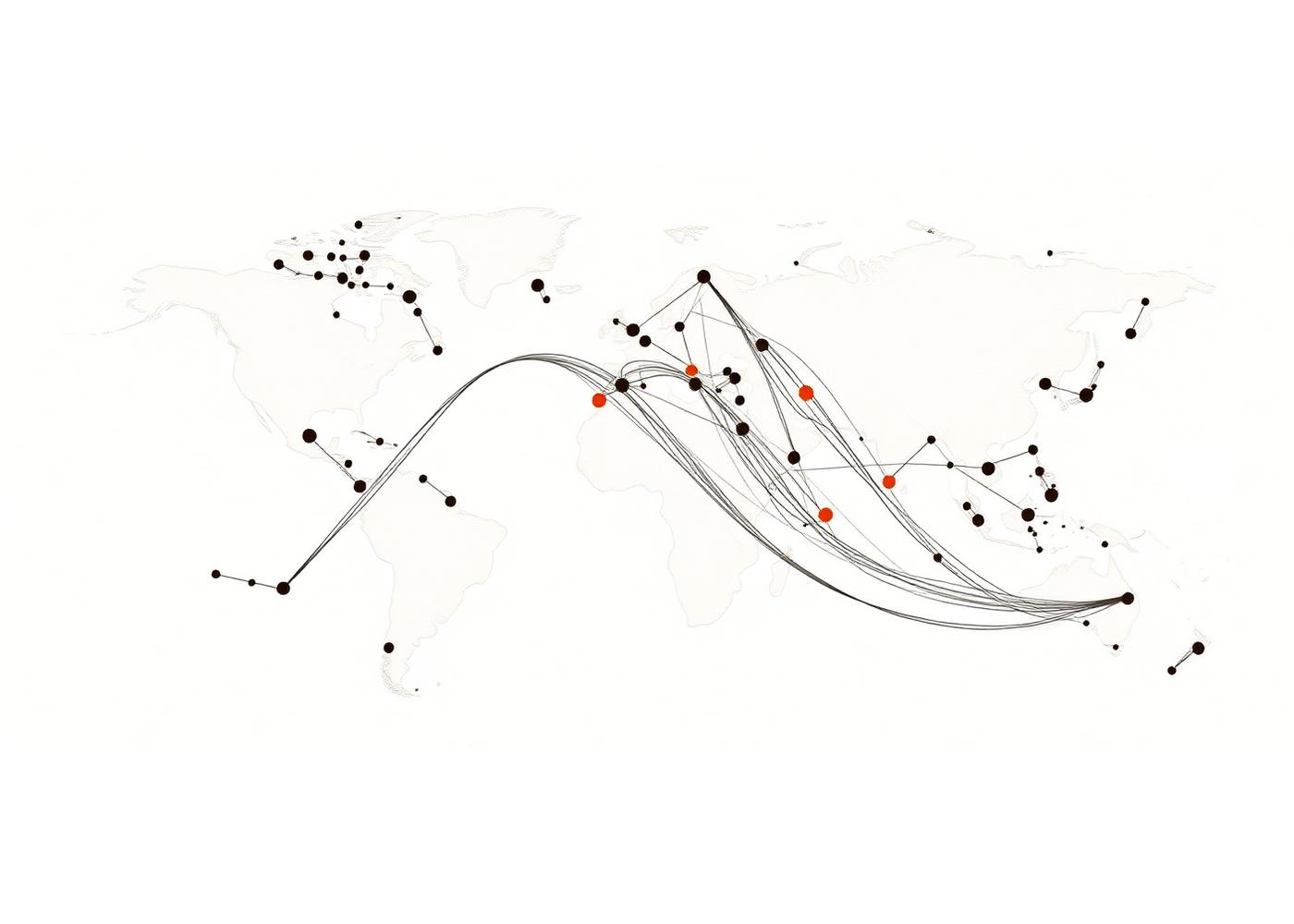
Editorial map of connected nodes — data engineering
S.14

Quality Assurance

A written quality strategy and the automation that implements it, integrated into delivery rather than performed at the end.

Key capabilities
  • ·Test strategy and automation architecture
  • ·End-to-end, integration, and load testing
  • ·Accessibility testing and remediation
  • ·Continuous quality monitoring in production
  • ·Regression protection for legacy systems
Business value

Software that behaves as documented, degrades gracefully, and can be changed confidently — because the tests describe what the system is supposed to do.

Typical use cases
  1. 01Establishing quality practice in a growing team
  2. 02Stabilising a system before a major release
  3. 03Meeting accessibility and regulatory requirements
S.15

Technical Support

Sustained operation of systems the studio has built or adopted — including on-call coverage, incident response, and iterative improvement.

Key capabilities
  • ·Application and infrastructure support
  • ·On-call rotation and incident management
  • ·Bug triage and prioritised remediation
  • ·Continuous small improvements
  • ·Runbook maintenance and knowledge transfer
Business value

Live systems that do not degrade after launch — supported by the same engineers who built them and by written documentation the client can eventually take over.

Typical use cases
  1. 01Ongoing support of studio-built systems
  2. 02Adoption of orphaned systems needing responsible stewardship
  3. 03Interim operation while an internal team is being hired
Note

Services are shaped, not selected.

The catalogue above is a working reference, not a menu. Real engagements always combine several disciplines and are scoped in writing before any commitment. When a request does not obviously match any of the categories here — a technical due diligence, a focused research project, an unusual integration — the studio is equally comfortable proposing a bespoke arrangement.